Mostrando postagens com marcador Coisinhas Interessantes. Mostrar todas as postagens

4 de dezembro de 2014

Da Lamentação da Infelicidade The Lamentation of Unhappiness

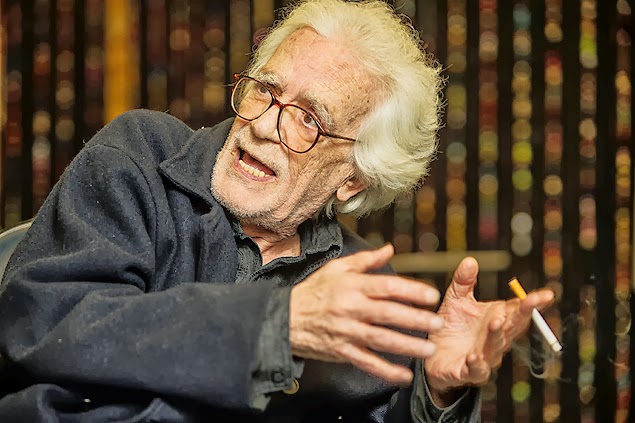
                                                                         Jean Claude Bernadet

Recentemente, a revista Pesquisa da Fapesp publicou uma longa e reveladora entrevista com um dos maiores e mais importantes pensadores, roteiristas e críticos de cinema do Brasil, Jean Claude Bernadet. Nascido na Bélgica, veio para São Paulo com 13 anos e, apesar de só ter iniciado suas atividades como cineclubista, roteirista e crítico - entrando, segundo ele "em contato com o Brasil e os problemas do país" -, bem mais tarde, não demorou para se transformar em referência quando o assunto envolve a sétima arte praticada em terra brasilis. 

Nesta conversa, que por um acaso do destino tem tudo a ver com É Quase Verdade e os temas levantados pelo filme, Bernadet não poupa o cinema brasileiro: atira contra o uso constante da miséria como tema de documentários. "Ela nunca gera problema político porque gera um discurso do consenso, além de chamar a atenção para a piedade, a bondade e a lamentação da infelicidade."

Como o texto é muito longo, destacamos aqui três importantes perguntas e as respostas de Bernadet sobre o assunto, mas ao final um link leva à entrevista completa, que, como veremos, vale muito a pena. Enjoy.

A que você atribui o momento atual do cinema brasileiro não muito feliz?

Uma das explicações fáceis é a questão do subsídio. Não se tocam em alguns temas. Tive relações intensas com vários documentaristas, vi montagens, versões. Um deles me disse, certa vez, que os desastres ambientais da Petrobras são enormes. Sugeri então que ele fizesse um filme sobre isso. Ele me respondeu que, se o fizesse, o cinema brasileiro acabaria. Sabemos que a Petrobras é uma forte patrocinadora do cinema. Uma das questões que se coloca num certo nível de documentário é a horizontalidade. A horizontalidade da miséria nunca cria problema político, porque ela gera um discurso do consenso, além de chamar a atenção para a piedade, a bondade e a lamentação da infelicidade. Já sugeri várias vezes que a evolução do cinema devia se dar no sentido de uma verticalidade e que essa miséria tão abundantemente mostrada pelos documentários, se fosse inserida no sistema como um todo, as coisas poderiam mudar de significação e perspectiva. Acho que há uma grande despolitização da miséria. A miséria é um grande achado da classe média. É um discurso que não cria nenhum problema. Fica a ilusão de que se está abordando questões de miséria ou de sem-teto, que estamos fazendo alguma coisa. Mas não estamos fazendo nada.  

Outra reclamação constante é sobre a pobreza dos roteiros.

A importância do roteiro provém muito da desimportância da produção. Como não se consegue produzir, você faz roteiro, refaz o roteiro, faz curso de roteiro, tem concurso de roteiro… Sem produção e sem toda uma máquina para produzir isso – inclusive a dramaturgia – não se tem nada. Não é que a dramaturgia não seja importante, ao contrário. Mas, se não estiver no quadro da produção, não resolve. É preciso ter em vista um conjunto imenso de parâmetros. De como filmar, ter o circuito de distribuição antes de filmar, o filme mirar o público certo etc. Precisamos criar um sistema de produção em que entra a dramaturgia. Sozinha ela não resolve. Pode-se fazer o mais fantástico filme, mas isso não o colocará necessariamente no Cinemark.

Hoje você está mais voltado para o chamado Cinema Marginal?

O meu gosto seria estar na produção e realização de filmes políticos. A única coisa que eu não gosto dessa expressão é o fato de ela vir marcada por um movimento dos anos 1960, que é o Cinema Marginal, tocado por grandes cineastas como Júlio Bressane ou Rogério Sganzerla, entre outros. Isso é muito ruim para as jovens gerações. Eles têm que se livrar dessas referências. Parece simples, mas não é: o peso dos anos 1960 nos ombros dos jovens cineastas, dos estudantes, essa referência eterna ao Cinema Novo, ao Cinema Marginal. O bandido da luz vermelha [1968] continua sendo um filme admirável, a atuação da Helena Ignez, em A mulher de todos [1969], é espantosa. A questão é como lidar com a tradição – se ela é opressiva, não estimula a criação.

http://revistapesquisa.fapesp.br/2014/10/09/jean-claude-bernardet-um-critico-contra-estetica-da-miseria/

Recently, Fapesp Research Magazine published a long and very revealing interview with one of the most important Brazilian film critics, scholars and screenwriters of all time, Jean Claude Bernadet. Born in Belgium, he came to São Paulo at 13 and despite having initiated his activities as a cinephile, screenwriter and movie critic only later - getting in touch according to himself "with Brazil and its problems" -, it didn´t take long for him to become a reference when it comes to the seventh art being made in terra brasilis.   

In this conversation, which BTW has everything to do with our film It´s Almost True and the themes inserted in the movie, Bernadet is no good to Brazilian Cinema: he shoots against the constant use of poverty as a theme to documentaries. "Poverty never generates political problem simply because it generates a speech of consensus, besides calling attention to piety, devotion to goodness and lamentation of unhappiness."

Since the text is very long, we should highlight three of the most important questions and answers by Bernadet about this subject, but you can find the link to the whole text right down below and which you´ll see is really worth reading. Enjoy.

To what do you attribute the not-so-very-happy moment of Brazilian Cinema?

One of the easiest explanations is the question of subsidy. They don´t tackle some themes. I´ve had intense relationships with various documentarians, I´ve seen many versions of their work, many editing versions. One of them once told me that enviromental disasters by Petrobras are enourmous. I suggested to him to make a film about it. He answered me back saying that if he did, Brazilian Cinema would vanish. We know Petrobras is one strong sponsorship of cinema. One of the questions that at a certain level people attribute to documentaries is their horizontality. Poverty horizontality never creates political problems, because it generates a consesus speech, besides calling attention to piety, goodness and the lamentation of unhappiness. 

I´ve already suggested many times that the evolution of cinema should be attached to a verticality and that this poverty so much shown by documentaries, if it was inserted in the system as a whole, things could change focus and meaning. I think there´s a great depolitization of poverty. Poverty is a great find of the middle class. It´s a speech that does not create any problem whatsoever. You get the illusion you´re talking about poverty matters or the homeless matter, that we´re doing something But we´re not doing anything.

Another complaint comes from the deficiency of screenplays.

The importance of the script comes from the not-so-importance of production per se. Since you can´t produce, you write a script, you rewrite the script, you attend a script course, there´s lots of script contests... Without a production system - including dramaturgy - you have nothing. It´s not that dramaturgy is not important, on the contrary. But if it´s not on the production board of the system it doesn´t mean anything. It´s necessary to have a whole bunch of parameters. Of how to shoot a picture, of having the distribution circuit before shooting the picture, of having the right target audience, etc. We need to create a production system that dramaturgy is inserted. Dramaturgy itself does not resolve the problems. You can make the most fantastic film, but that doesn´t necessarily mean it will open on Cinemark. 

Are you leaned towards the Underground Cinema today?

My taste would be that of the production and making of political films. The only thing I don´t particularly like about this expression is that it comes attached to this 1960s movement, which is Underground Cinema, made by great filmmakers like Júlio Bressane and Rogério Sganzerla, among many others. This is very bad for new generations. They have to get rid of those references. It seems simple, but it isn´t: the weight of the 1960s on the shoulders of these young filmmakers, students, this eternal Cinema Novo reference, the Underground Cinema. The Red Light Bandit (1968) is a remarkable film, Helena Ignez´s acting in The Woman of All (1969) is awesome. The question is how to deal with tradition - if tradition is oppressive it does not stimulate creation.


http://revistapesquisa.fapesp.br/2014/10/09/jean-claude-bernardet-um-critico-contra-estetica-da-miseria/


15 de outubro de 2014

O Palacete Abre As Portas Palacete Opens Its Doors


São Paulo ganha mais um espaço destinado à difusão da cultura com o Palacete Carmelita. Datado de 1912, e localizado na parte central da metrópole, próximo à região da República, o lugar funcionou durante anos como um hotel butique, onde estrangeiros vindos de todos os cantos se hospedavam para apreciar o que Sampa pode oferecer de melhor, ao menos ao redor daquela área - próxima a bares, restaurantes, e vida noturna agitada. 

Segundo a proprietária do imóvel, Rebeca Carratu, depois de uma big reforma, a qual, aliás, não descaracterizou em nada o imóvel, o lugar agora quer abrigar atividades ligadas ao mundo da cultura e entretenimento. Lá, ela e sua sócia, Ila Girotto - produtora free lance que já atuou para a O2, Bossa Nova Filmes, entre outras -, pretendem abrir o espaço para ensaios, mostras, exibições de filme, peças teatrais, leituras e todo tipo de conjunto de manifestações que o espírito inventivo permitir. 

E o que isso, afinal, tem a ver conosco? Bem, vocês saberão daqui a alguns dias - porque um esquema quentíssimo e ultrainteressante está borbulhando nos confins da criatividade :)


São Paulo has gained one more place for the difusion of culture with the Palacete Carmelita. Dated back of 1912 and located in the central region of the metropolis, near the República area in downtown, the place was for many years a boutique hotel where foreigners from all over the world would be hosted there to appreciate what São Paulo would offer at its best, at least in that region of the city, full of bars, restaurants and an agitated nightlife.

According to the proprietor, Rebeca Carratu, after a very big remodeling, which, BTW, did not deprive of its original characteristics, the place now will house activities linked to the world of culture and entertainment. There, she and her partner, Ila Girotto - a free lance producer who has worked for companies like O2, Bossa Nova Filmes, among others - intend to open the space for rehearsals, exhibitions, film screenings, lectures and all kind of artistic manifestation the creative spirit would allow.

But what all this has to do with us after all? Well, you´ll know in a few days - simply because very exciting and bubbling ideas are in store for us right now :)


1 de agosto de 2014

Memes de "É Quase Verdade" Estão Rolando na Internet "It´s Almost True" Memes Surface the Net

E eis que de repente, não mais que de repente, nos deparamos com alguns memes de É Quase Verdade disparados por aí. OMG!

And suddenly, all of a sudden, we came to know about some It´s Almost True memes surfacing the net. OMG!

Facebook

Twitter


                             "So, no public money, no Brazilian Cinema. Come on, give me a break!"


        "The 10 biggest production companies get the 40% of Brazilian Cinema´s income. Very fair, don´t you                                                                                    think?"


"You give me $1 Real, and then it discounts 100% on your company´s taxes. And then you wanna have                                                                  your logo on MY WHOLE FILM?"


"Nobody was interested on your first feature, and now you got more money to make your second? What a                                                                                       life, uh?


                            "You want 30% so I can get financing for my film? Where do I sign up?"

25 de junho de 2014

Pré-Estreia de "É Quase Verdade" em São Paulo São Paulo Premiere of "It´s Almost True"


E eis que, enfim, nosso pequeno petardo, um média-metragem chamado É Quase Verdade tem sua pré-estreia para equipe, elenco e convidados, na cidade onde ele nasceu, São Paulo. O filme do diretor Emanuel Mendes recebeu a acolhida do pessoal bacana do Matilha Cultural - espaço alternativo da capital paulista (e que, para alguns, chega mesmo a lembrar o Studio 28, o emblemático cinema da rue Tholozé, em Paris) com uma aconchegante sala de cinema - para as primeiras projeções. A data está marcada para o final de julho, e vocês podem acompanhar tudo sobre o filme e sua carreira aqui mesmo neste nobre espaço dedicado inteiramente a ele.

Vale lembrar que as cópias de É Quase Verdade já estão encaminhadas a alguns dos principais festivais no Brasil, Europa e América Latina em geral. 

A partir de agora, e até a pré-estreia, uma série de posts com entrevistas, trailer, matérias, análises e uma campanha muito especial envolvendo o filme e o universo da cultura em geral. Tudo para vocês não perderem nadinha sobre É Quase Verdade. Fiquem ligados.

And here, at last, is coming our newest child, a middle-lenght film called It´s Almost True, which will have its premiere for cast, crew and guests in the city where it was born, São Paulo. The film by director Emanuel Mendes has received a warm welcome by the good folks at Matilha Cultural - an alternative space of the state capital (and which, for some, indeed reminds Studio 28, the emblematic art house movie theater on rue Tholozé in Paris) with a very comforting projection room - for the first screenings. The date is set for the end of July, and you can get to know everything about the film and its career right here on this noble space dedicated to it. 

It sure is nice to remember that the copies of It´s Almost True are already on their way to some of the main festivals in Brazil, Europe and Latin America.

From now on, and up to the premiere, a series of posts with interviews, trailer, texts, scoops, and a very special advertising campaign involving the film and the culture universe as a whole. So you´ll miss nothing about It´s Almost True. Stay tuned.

Facebook

Twitter    

28 de fevereiro de 2014

Semeie Cultura Seed Culture


Todo mundo está fazendo seu próprio letreiro de Hollywood na tentativa de ajudar o Cahuenga Peak, ameaçado pela especulação imobiliária. Pois bem, nós também resolvemos fazer o nosso, e, de quebra, mandar uma mensagem importante para quem acredita no poder da arte. 

Não deixe de acompanhar todas as notícias de nosso pequeno grande filme bem aqui, neste espaço de blog.

Everybody is making their own Hollywood lettering in order to help Cahuenga Park, threatened by property speculation. Well, we have decided to make one of our own, and, at the same time, send an important message to anyone who believes in the power of art.

Don´t miss the updates on our little big film right here in this blog space. Keep up with us!

Facebook

Twitter

14 de fevereiro de 2014

O Ano do É Tudo Verdade The Year of It´s All True


Copa do Mundo e protestos, crise no governo, inflação chegando de fininho, eleições, uma descrença geral por boa parte da população: este parece ser o cenário que inicia 2014 e que promete esquentar o ano inteiro até pelo menos novembro. E é também neste mesmo cenário que É Quase Verdade, o terceiro curta-metragem do diretor Emanuel Mendes, e a primeira produção-solo da Sincronia Filmes, vai estrear.

"Nunca pensamos que o filme pudesse ser tão atual como agora. Nós o rodamos em 2011 e, como toda produção independente sem incentivo, feita no muque e na raça, demorou dois anos e meio para ficar pronta. Mas ironicamente parece ter chegado na hora certa", diz Anthayr Nakamura, production manager para a Sincronia, e um dos coordenadores da campanha de lançamento do filme. "E, mesmo que seja um curta, com um alcance limitado se comparado ao longa, estamos curiosos para ver qual será a reação das pessoas a ele e o que ele pode suscitar em festivais, mostras e exibições especiais". Muitas delas, aliás, já em preparação - como a que pretende levar o filme para escolas e universidades, por exemplo.


"Queremos levar o filme para o público que saberá discuti-lo da forma que ele merece", continua Nakamura. "Foi esse mesmo público que, em maior ou menor grau, saiu às ruas para protestar. E nas exibições vamos levar o Emanuel também para ampliar o debate, porque em geral as pessoas gostam de ouvir o que o diretor pretendia com sua obra", diz. "O filme está leve, divertido, irônico, sarcástico, mas também possui uma pegada muito tapa na cara, pode provocar risos nervosos e algumas pessoas que já o assistiram o consideram até um pouco pesado, agressivo."

Nakamura destaca que o filme possui duas vertentes - a sátira e a realidade. "É que, ao mesmo tempo em que é um documentário falso, interpretado por atores, há também importantes depoimentos de pessoas reais, como o cineasta Guilherme de Almeida Prado, o qual interpreta um diretor de cinema de terceiro mundo, dependente do Estado, de dinheiro público e congêneres para sobreviver", continua Nakamura. "E tudo o que ele diz tem ressonância direta com o que está acontecendo no Brasil neste momento." 


E, por fim, existe também todo o aspecto da metalinguagem - ou seja, quando o cinema fala de si próprio. "Isso ainda é raro de se ver no cinema brasileiro, e um dos poucos a tocar no assunto de forma mais profunda sempre foi, ironicamente, Guilherme de Almeida Prado. É Quase Verdade é um filme sobre muitas coisas, e uma delas, talvez até a principal, é que é um filme sobre o próprio cinema brasileiro, sobre o modus operandi dele", finaliza Nakamura. 

A previsão de estreia em São Paulo é maio, e o filme deve começar a percorrer festivais e mostras a partir dessa data. Fiquem ligados. 

World Cup and many protests, crisis inside the government, inflation sneeking out, national elections, a total disbelief from many of the nation´s people: this is the scenery that ignites 2014 and which promises to heat up the debate until at least the end of November. And it is also in this scenery that It´s Almost True, the third short film by director Emanuel Mendes, and the first solo production from Sincronia Filmes, will open.

"We never thought the film could be as that relevant as it is today. We shot it in 2011, and like many independent production, done on the guerrila filmmaking style, it took two and a half years to get ready. Ironically, it seems to have come in the right time", says Anthay Nakamura, production manager for Sincronia, and one of the coordinators of the film´s release. "And even if it´s a short film, whose reach is still limited if you compare it to a feature, we´re curious to know what kind of reaction people can get from it and what it can stir up at festivals and screenings alike". Many of them, BTW, are already in preparation - like the one that promises to take the film to schools and universities, for instance.

"We want to take the film to the right public, the one that will know how to appreciate it and debate it the way it deserves", continues Nakamura. "It was this very same public that, in a more or less degree, went and has been going to the streets to protest. And during the screenings we want to take Emanuel, because usually people like to hear what the director has to say about his/her work", he says. "The film is light, ironic, sarcastic, but it also has this "hit on the face" kind of attitude that can provoke nervous laughs, and some of the people who have seen it consider it to be a little aggressive, a little heavy".

Nakamura highlights that the film has two sides - the satirical one and the real one. "At the same time it is a mockumentary, faked with actors, there are also important testimonies from "real" people, like the one by (Brazilian film director) Guilherme de Almeida Prado, who portrays a third world filmmaker dependent on money from the government in order to survive", continues Nakamura. "And everything has some sort of resonance to what is happening in Brazil right now."

And finally, there is this whole aspect of meta-language, which happens when cinema talks about itself. "This is very rare in Brazilian Cinema and ironically one of the few to really touch this is Guilherme de Almeida Prado himself. It´s Almost True is about many things, and one of them, maybe even the main one, is that it is a film about Brazilian Cinema, about its modus operandi", concludes Nakamura.

The film is set to open in São Paulo in May, and it must start running festivals around this date. Stay tuned. 


2 de fevereiro de 2014

Eduardo Coutinho Morre no Rio de Janeiro Eduardo Coutinho Has Died in Rio de Janeiro


Estamos muito tristes e devastados pela notícia da morte de Eduardo Coutinho, um dos mais importantes documentaristas do mundo. 

"O cineasta Eduardo Coutinho, de 81 anos, foi assassinado a facadas neste domingo por volta das 11h50 dentro de casa, no bairro da Lagoa, zona sul do Rio. O filho, Daniel Coutinho, é tido como o principal suspeito, segundo a polícia. De acordo informações da Divisão de Homicídios, ele também seria o responsável por esfaquear a mãe e, em seguida, teria tentado se matar.

A mulher do cineasta, Maria Oliveira Coutinho, 62, foi socorrida pelos bombeiros no apartamento onde mora a família, e internada em estado grave no Hospital Municipal Miguel Couto, na Gávea, zona sul. O filho também foi levado para lá, com ferimentos menos graves, segundo a assessoria de imprensa da Polícia Civil. Segundo vizinhos do cineasta, Daniel, que morava com os pais, sofria de esquizofrenia. O corpo de Coutinho foi encaminhado ao IML, onde foram feitos exames que constataram a morte por ação de objeto perfuro-cortante. O laudo final será divulgado em 30 dias, no qual será descrito o tipo de arma e outros detalhes do crime.

Como a família ainda não levou documentos para seguir com o processo, o corpo não deve ser liberado hoje. A previsão é que isso ocorra nesta segunda-feira. Não foi marcado ainda o enterro nem o velório. Natural de São Paulo, Eduardo Coutinho era considerado um dos principais documentaristas do Brasil. Entre seus trabalhos de maior destaque estão Cabra Marcado para Morrer (1985), Edifício Master (2002), Jogo de Cena (2007) e Babilônia 2000 (1999). Em 2007, o cineasta ganhou um Kikito de Cristal, principal premiação do cinema brasileiro, pelo conjunto da obra. Seu trabalho caracteriza-se pela sensibilidade em retratar na telona pessoas comuns.

Grande homenageado da Mostra Internacional de Cinema de São Paulo em 2013, Eduardo Coutinho, em outubro passado, renegou o cinema como instrumento político de intervenção no que o público pensa ou deveria pensar. O filme militante é uma tragédia porque já está escrito antes. Convencer o já convencido é terrível, fazer um filme para convencer alguém é terrível, disse o documentarista. Ao todo, Coutinho lançou 22 filmes durante sua carreira."

We are very sad at the news of Eduardo Coutinho´s death, he was one of the most important documentary directors of all time.

"The director Eduardo Coutinho, 81, has been murdered by knife stabs this Sunday at around 11:50 AM in his own home, in the Lagoa neighborhood, south area in Rio de Janeiro. The son Daniel has been identified as principal suspect according to the police. Also, Daniel is supposed to have killed his own mother, trying to kill himself afterwards.

The filmmaker´s wife, Maria Oliveira Coutinho, 62, has received medical help and is interned at Hospital Municipal Miguel Couto. According to police Daniel, who lived with his parents, suffered from eschizophrenia. Details of the crime and the perpetuation of it will be given within 30 days from now. 

Eduardo Coutinho was considered one of the most important documentary filmmakers of all time. He has directed the films Cabra Marcado para Morrer (1985), Edifício Master (2002), Jogo de Cena (2007) and Babilônia 2000 (1999). In 2007, the director received the Kikito de Cristal, one of Brazilian Cinema´s most important awards. His work was characterized by the sensibility in showing and exploring simple people on the big screen.

An homage was paid to him during 2013´s São Paulo International Film Festival and he is quoted to have said that the militant film is within itself a tragedy because it is already written down, and trying to convice the audience to do something is one of the biggest mistakes a filmmaker can try to do.


23 de janeiro de 2014

Paramount Lança Última Cópia em 35mm Paramount Has Released Their Last Print in 35mm


A Paramount Pictures se tornou o primeiro grande estúdio de Hollywood a parar a distribuição de cópias no formato película 35mm nos EUA, oferecendo-as apenas em digital. A mudança, é claro, reflete a alteração no uso da projeção digital como um todo. Apenas 8 por cento das 40 mil salas dos Estados Unidos são equipadas para a projeção em película, de acordo com a National Association of Theater Owners. A última cópia no formato filme da Paramount foi Tudo Por Um Furo (Anchorman 2: The Legend Continues). E muitas das salas com exibição em película encontram-se no interior dos EUA, onde os donos dos cinemas estão cada vez mais pressionados a adotar a mudança inexorável. Curiosamente, no Brasil, existem ainda muitas salas que fazem a exibição em filme, embora tenha havido um boom na produção e captação de imagens em digital. Não custa lembrar que É Quase Verdade foi todo rodado em digital, com a câmera 5D da Canon. 

Fiquem ligados nas notícias de nosso pequeno petardo aqui mesmo nesse nobre espaço de blog.   

Paramount Pictures became the first major Hollywood studio to stop delivering movies on 35-millimeter film in the United States, offering them only in digital format. The change of course reflects a shift toward use of digital projection. Only about 8 percent of about 40,045 United States theaters screens are equipped to show movies only in a film format, according to the National Association of Theater Owners. The last Paramount picture delivered to some theater owners in a film format was Anchorman 2: The Legend Continues. Many of the remaining film-only screens are in small towns, where owners have been hard pressed to afford a conversion. Curiously in Brazil there are still many remaining theaters screening productions on film format, even though in recent years there´s been a boom on productions captured on digital. Not to mention that It´s Almost True has been entirely filmed using the Canon 5D camera. 

Stay tuned for more news on our little pet film right here in this noble blog space. 


19 de janeiro de 2014

Episódio de "Os Chorões" Fala Sobre Cinema Belas Artes "The Criers" Episode Talks About Belas Artes Movie Theater


Em 2012, a Sincronia Filmes estreou em seu canal no YouTube Os Chorões, uma websérie tratando de assuntos sobre o cotidiano e os problemas das pessoas em geral. Um dos episódios, aliás dirigido por Emanuel Mendes, diretor de É Quase Verdade, falava sobre o (então) recente fechamento do Cine Belas Artes, tradicional reduto de cinéfilos e artistas em geral da capital paulista. Como "esquenta" para o lançamento do filme este ano - e toda a campanha que o pessoal da Babaorum Publicidade está montando -, resolvemos postar o episódio propriamente dito para seu deleite e prazer. Sorry, pessoal, não há legendas em inglês :(  

In 2012, Sincronia Filmes released on their YouTube channel The Criers, a webseries that talked about people´s problems and their everyday lives as a whole. One of the episodes, BTW directed by Emanuel Mendes, the helmer behind It´s Almost True, was about the (then) recent closing of the Belas Artes Movie Theater, the traditional  São Paulo shelter of cinephiles and artists as a whole. As an "appetizer" for the release of the film this year - and the advertising campaign designed by Babaorum Publicidade, the Sincronia Ad Agency -, we´ve decided to post the episode for your pleasure and enjoyment. Sorry people, there´s no English subtitles :(


Twitter    

23 de dezembro de 2013

Feliz Natal e Um Grande 2014! Merry Christmas and a Great 2014!

Make each and every moment of 2014 unique.


É o que nós desejamos para todos os que nos acompanham por aqui. Nos vemos o ano que vem!

It´s what we all wish you from the deep of our hearts. We´ll catch with you next year!

Facebook

Twitter

18 de dezembro de 2013

Apresentando: Antonio Rodrigues, Ilustrador e Designer Gráfico Presenting Antonio Rodrigues, Illustrator and Graphic Designer

                                                                              Hi, there!

Nascido no Brasil e formado em Artes Visuais, Antonio Rodrigues Jr. é um ilustrador e artista gráfico de incrível talento. Baseado em Londres, de onde faz pinturas, desenhos - muitos dos quais estampados em camisetas - e ilustrações as mais diversas, o artista é auto-didata, e só bem recentemente começou, em suas próprias palavras, "a pensar em design como uma profissão". Antonio também forneceu o template para o teaser poster de É Quase Verdade, e muito de sua arte definiu a identidade visual que iremos dar para o trabalho de divulgação do filme. Para conhecer mais sobre Antonio, é só clicar em www.antoniorodriguesjr.com

Born in Brazil and graduated from Fine Arts, Antonio Rodrigues Jr. is an incredibly talented illustrator and graphic designer. Based in London, from where he sketches, paints and draws - many of them on a varied number of creative T-shirts - the young artist is a self-taught talent, and only recently has started thinking about design professionally. Antonio has also given us the template for the teaser poster of It´s Almost True, and much of his art has defined the visual identity that we will give to the work of divulging the film. To know more about Antonio just log on to www.antoniorodriguesjr.com

Facebook

Twitter

4 de dezembro de 2013

Lucio Marques é Condecorado Lucio Marques Receives Badge of Honor


Parece que a temporada de festas e comemorações de fim de ano teve início mais cedo. Estamos felizes em anunciar a condecoração de Lucio Marques, ator de É Quase Verdade (na foto acima com Simone Leite, à esquerda, que também está no filme), pelo Mérito Cultural na cidade de Pouso Alegre, terra natal do ator. Lucio vem trazendo risos e alegria com sua trupe de atores em espetáculos como o Show Brega, que já tem carreira há vários anos. Nossos parabéns mais que sinceros! 

E segura lá porque ano que vem É Quase Verdade rodando festivais, mostras e estreias especiais.

Looks like holiday specials have decided to start a little earlier this year. We´re happy to announce the special decoration, a badge of honor, given to Lucio Marques, one of the actors of It´s Almost True (in the photo above with Simone Leite, left, who also plays a character in the film) for Cultural Merit in the city of Pouso Alegre, countryside MInas Gerais, Lucio´s homeland. The actor has brought a lot of joy and fun with his theater plays and the Show Brega concerts, whose career has spanned many years now. Our sincere congratulations!

And hold on to your seats because It´s Almost True is coming along next year to film festivals, special screenings and premieres all over the place.

Facebook

Twitter

21 de agosto de 2013

É Tudo Verdade Com Mirrah Iañez It´s All True With Mirrah Iañez

                                                          E aí, vamos rodar?           So, roll cameras?


Uma pausa nas informações de nosso pequeno petardo para outras igualmente relevantes: o filme Estátuas Vivas, um belo documentário sobre os artistas de rua que ganham a vida com o estatuísmo, tem sua estreia oficial no Festival Internacional de Curtas-Metragens de São Paulo. Dirigido por Mirrah Iañez (foto acima), o filme retrata, com a sensibilidade peculiar e engajada desta jovem diretora vinda da Universidade Anhembi Morumbi, e uma das apostas da Sincronia Filmes, como esta arte pouco conhecida pelo grande público é mal vista pela sociedade. Através dos depoimentos de quem a pratica, ficamos sabendo das dificuldades, dos olhares de dentro e de fora, e da desmistificação de uma prática que muitos consideram alternativa para falta de emprego ou qualificação profissional. Mais informações podem ser acessadas em:

http://www.kinoforum.org.br/curtas/2013/filme/36711/estatuas-vivas

A little pause on the information concerning our pet project for another one equally relevant: the film Living Statues,  a beautiful documentary about the artists who make their living with the so-called statuism, has an official premiere at the São Paulo International Short Film Festival. Directed by Mirrah Iañez (photo above), the film shows, with Iañez´s peculiar and engaging sensibility (she is also one of our great bets), an art form very little known by the great public. We get to konw, through the heading talks who live day-by-day this reality, the difficulties, the views both from the inside and the outside, and the demistification of a practice that many people consider an alternative to the lack of work and professional skills. More on the film can be accessed at:

http://www.kinoforum.org.br/curtas/2013/filme/36711/estatuas-vivas

Facebook

Twitter  

12 de agosto de 2013

É O Grão, Estúpido! It´s The Grain, You Fool!

                                               Rick, o que será da próxima restauração?    Rick, what about the next restoration?


A julgar pelas belas restaurações pelas quais muitos filmes clássicos andam passando, dá para se ter uma ideia do estilo visual e da textura da imagem que a gangue da finalização vai dar nas próximas semanas em É Quase Verdade. Apenas para ilustrar um caso, basta dar uma olhada na foto acima, tirada do frame do Blu-Ray de Casablanca edição de 70o aniversário. O plano do fotógrafo Mario Cassettari e do diretor Emanuel Mendes é transpor ao máximo a textura da película para o produto final.

Judging by the finest restorations that some cinema classics have been undergoing, we can have a slightly clear idea of the visual style and texture that the folks finishing up It´s Almost True plan to give to the film. To better illustrate the case, check out the image above, taken directly from the frame of the 70th anniversary Blu-Ray edition of Casablanca. The plan from DP Mario Cassettari and director Emanuel Mendes is to transfer the most accurate texture from the grains of film to the final product. 


9 de agosto de 2013

História da Proporção de Tela History of Aspect Ratio

Run, Cary, run!


Muito bem, dando continuidade ao assunto do post anterior, eis que os chapas do site FilmmakerIQ (aqui: http://filmmakeriq.com/), um dos melhores quando o assunto é cinema, disponibilizaram uma muito bem-feita e divertida aula sobre a história da proporção de tela. Para quem não sabe, este é o tamanho do frame das tomadas do jeito que foram filmadas. Como É Quase Verdade foi todo rodado com a câmera 5D da Canon, a proporção é 16x9, com janela 1.78:1, mas o diretor Emanuel Mendes e o diretor de fotografia Mario Cassettari irão reenquadrar o frame para 1.66:1, um formato, segundo o diretor, "mais apropriado ao tipo da história que contamos." Assista ao vídeo acima para entender as mudanças ao longo do tempo e como elas influenciaram a estética dos filmes.

Very well, continuing the subject of our last post, the guys from the site FilmmakerIQ (here: http://filmmakeriq.com/), one of the best when it comes to film and the filmmaking process, have made avaiable a very nice and very fun cinema lesson on the history of the aspect ratio. For those of you who don´t know about this or are not very much into the technical gobbledygook, this is the size of the frame the way it was composed in the final film. Since It´s Almost True was shot entirely using the Canon 5D digital camera, the proportion goes for 16x9, with the aspect ratio on 1.78:1, but director Emanuel Mendes and DP Mario Cassettari will reframe it entirely to 1.66:1, a format, according to Mendes, "more appropriate to the kind of story we´re unfolding." Watch the video above to better understand the changes over the years and how they have influenced the film aesthetic.


Twitter